

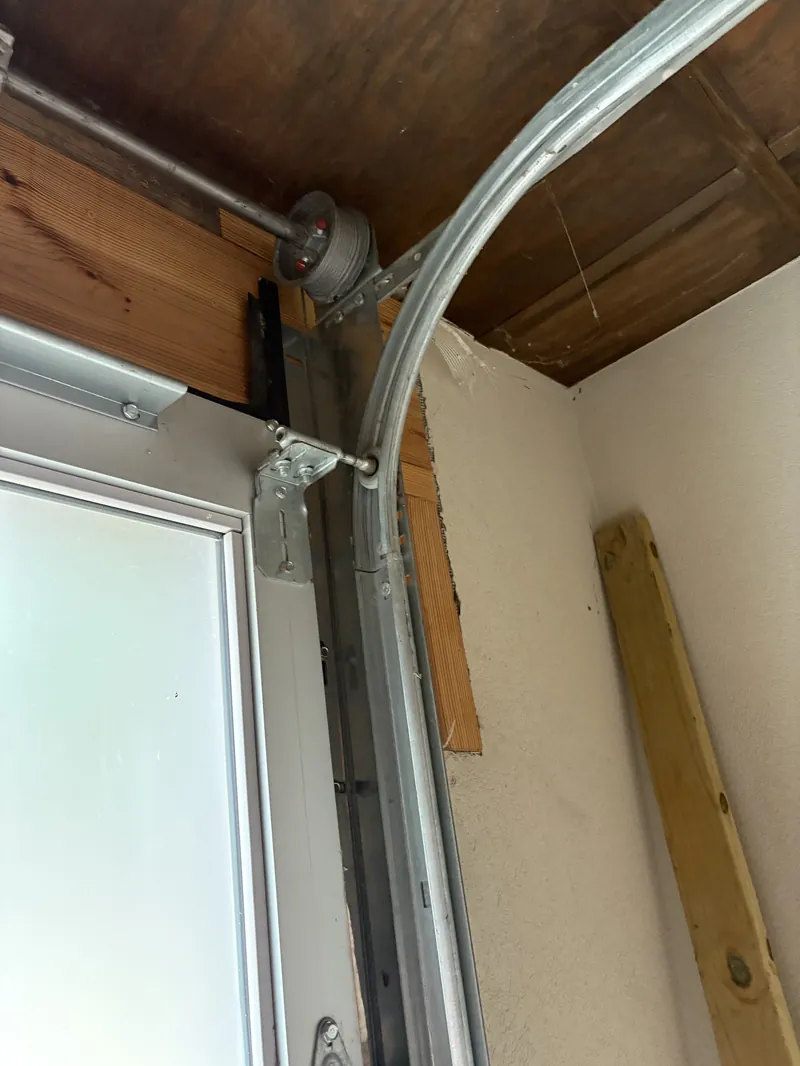
What a garage door tune-up includes
A garage door tune-up is a full check of the door and opener, plus the small adjustments that keep it running smoothly. We inspect the springs, cables, drums, bearings, rollers, hinges, tracks and seals, lubricate the moving parts, tighten the hardware, balance the door and test the opener and safety features.
The goal is simple: catch the worn parts before they fail. A frayed cable, a spring with rust between the coils or a cracked roller is cheap to deal with on your schedule and expensive when it breaks at 7 AM with the car inside. At the end of the visit you get a short list of what we found, with prices for anything that needs replacing, and you decide.
How often does a garage door need maintenance?
For most homes, once a year is a good rhythm. If the garage is the main way in and out of the house and the door runs many times a day, or the door is older, every six months is better. A door that has never been serviced, or one in a home you just bought, should be checked soon.
Between visits, a few quick checks take minutes: watch and listen to the door as it runs, look at the springs and cables without touching them, test the safety reverse once a month and keep the photo eye lenses clean. Anything new, like a loud noise or a crooked door, is a reason to call before the yearly visit.
Need help with your maintenance? Free estimate, price before work.
How to lubricate a garage door
Use a lubricant made for garage doors, usually a silicone or lithium spray. All-purpose cleaners and penetrating sprays are not long-lasting lubricants, and heavy grease attracts dust. With the door closed and the opener unplugged, spray the hinges, the roller bearings and stems, the springs and the bearings at each end of the torsion bar.
Do not lubricate the inside of the tracks. Rollers should roll, not slide, and grease in the track collects grit that wears rollers out. Wipe the tracks clean instead. Then run the door up and down a few times to spread the lubricant and wipe off any drips. A couple of times a year is plenty for most doors.
- Lubricate: hinges, roller bearings, springs, torsion bar bearings.
- Lubricate lightly: the opener rail on chain and screw drives.
- Do not lubricate: the inside of the tracks or nylon roller wheels.
- Do not use: heavy grease that collects dust.
Garage door weather stripping and bottom seal replacement
The rubber bottom seal and the weather stripping along the sides and top of the door close the gaps that let in rain, dust, leaves, insects and hot air. In Central Texas, summer sun and heat dry out and crack these seals, especially on west and south-facing doors, and storm-driven rain finds any gap at the bottom.
If you can see daylight under the closed door, the seal is flattened or torn, or water runs into the garage during storms, it is time for garage door weather seal replacement. A good bottom seal also keeps rain off the bottom brackets and cables, where rust starts. We replace bottom seals and perimeter weatherstripping as part of a tune-up or on their own.
Why is my garage door so noisy?
A noisy garage door is usually telling you something. Squeaking often means dry hinges, rollers or springs and is fixed with lubrication. Grinding and rattling usually point to worn rollers or loose hardware. A loud bang while the door is still is often a spring breaking, which needs spring repair right away.
The opener adds its own noise. Chain drives are louder than belt drives, and a loose chain slaps the rail. A tune-up deals with the lubrication and loose hardware. If the noise is coming from worn plastic rollers, roller replacement with sealed-bearing nylon rollers makes a big difference.
Need help with your maintenance? Free estimate, price before work.
Two safety tests every homeowner can do
The balance test: close the door, pull the red release cord and lift the door by hand to about halfway, then let go carefully. A balanced door stays roughly where you left it. If it drops or shoots up, the springs need adjusting. Reconnect the opener by running it until the trolley clicks back in.
The reverse test: lay a piece of wood, like a 2x4 on its flat side, on the floor in the middle of the doorway and close the door with the opener. The door should touch the wood and reverse. Then wave something through the photo eye beam as the door closes; it should stop and reverse. If either test fails, stop using the opener to close the door and call us.
Heat, storms and dust: maintenance in Central Texas
Austin normal highs stay above 90 degrees from late May to late September, according to the National Weather Service. That heat dries out lubricants and rubber seals faster than in milder climates, and the opener works hardest in a hot attached garage. Spring storm season adds wind-driven rain and humidity that rust springs and cables.
A good time for a tune-up is late winter or early spring, before the storms and the heat arrive, so the door goes into summer with fresh lubrication, sound seals and any worn springs or cables dealt with. A second visit in the fall suits busy households and older doors.
What affects garage door tune-up cost
A basic garage door tune-up covers the inspection, lubrication, tightening, balance adjustment and safety tests. The price depends on the door and the opener. Parts such as new rollers, seals, cables or springs are extra, and you see each one listed with its price before anything is replaced.
The estimate is free, and you get the price before any work starts. There is no pressure to replace parts that still work. If something is worn but has time left, we tell you so and you can plan for it. Call (512) 843-2980 to book a time that suits you.
How the visit goes
Most calls follow this order. Times are typical ranges, and we confirm the arrival window when you call.
| Step | Typical time | What happens |
|---|---|---|
| Book a time | A few minutes | Call and pick a time that suits you. Maintenance visits are scheduled, not rushed. |
| Inspection | About 15 to 20 minutes | Springs, cables, rollers, hinges, tracks, seals and opener checked, and the door balance tested. |
| Tune-up | About 30 to 45 minutes | Moving parts lubricated, hardware tightened, spring tension and opener settings adjusted. |
| Safety tests | About 10 minutes | Auto-reverse and photo eyes tested, remotes and wall control checked. |
| Report and options | A few minutes | You get a list of worn parts with prices. Nothing is replaced unless you approve it. |